
DSCR No Seasoning Cash-Out Refinance Idaho: How a Vacant Four Plex Produced a 1.53 DSCR and Returned Every Dollar on Day One!
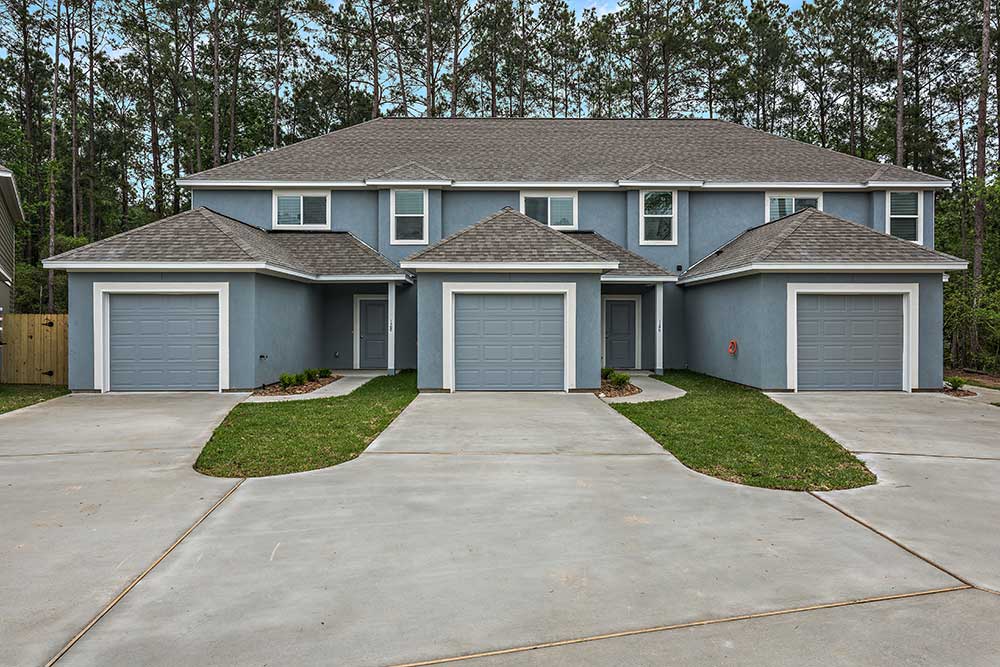
A Vacant Property. Zero Rental History. A 1.53 DSCR Ratio the Day Rehab Was Complete.
Most investors assume a vacant property cannot qualify for a DSCR cash-out refinance. No tenants. No rental income history. No executed leases. In conventional financing that assumption is correct — and it is the reason most BRRRR investors sit on completed deals for 12 months waiting for a seasoning clock to expire before they can access the equity they already created.
In Idaho DSCR financing that assumption is wrong.
A local Idaho Falls investor recently closed a no seasoning DSCR cash-out refinance on a vacant four plex the day his rehab was complete. The property had no tenants. No rental income history. No executed leases. The qualifying DSCR ratio of 1.53 was supported entirely by market rent from the appraisal’s 1007 rent schedule — and $40,000 in equity was wired to the investor on closing day.
Here is the full story — the deal structure, the capital stack, the financing mechanics, and what it means for Idaho investors running the BRRRR strategy in rural markets right now.
Why 1.53 DSCR on a Vacant Property Changes Everything
The number that defines this deal is not the purchase price. It is not the after-repair value. It is the 1.53 DSCR ratio produced by a vacant property with zero rental income history.
Combined market rent above $4,000 per month across all four units divided by $2,600 monthly PITI on the new $315,000 loan produces a ratio of 1.53. That number sits well above the 1.25 threshold that unlocks the best DSCR rates and program terms. It is not a marginal qualification. It is a strong cash flow signal that the Idaho Falls rental market supported all four units at rents that significantly exceed the debt service on the new loan — before a single tenant signed a lease.
That ratio was established entirely by the appraisal’s 1007 rent schedule — a comparable market rent analysis that determined what each unit would lease for in the current Idaho Falls market based on comparable rental properties in the area. No tenants required. No rental income history required. No executed leases required.
This is the detail that most Idaho BRRRR investors do not know is possible with lenders that accept vacant properties. The refinance does not wait for lease-up. The cash-out does not depend on finding tenants before the appraisal is ordered. The day the renovation is complete and the property is stabilized — with the right lender — the refinance process starts and the 1007 rent schedule does the income qualification work.
The Idaho Falls BRRRR Deal: Complete Numbers From Private Money to DSCR Cash-Out
The property was a vacant four plex in Idaho Falls — distressed enough to acquire below stabilized market value, structurally sound enough to renovate efficiently, and located in a rental demand corridor anchored by Idaho National Laboratory employment and a growing regional healthcare workforce.
The acquisition was funded with private money at 90% loan-to-cost with 100% of rehab costs covered. Here is the complete capital picture from entry to cash-out.
Private money structure:
Purchase price: $250,000
Private money loan at 90% LTC: $225,000
Rehab cost: $25,000 — covered 100% by private money lender
Total private money drawn: $250,000 plus fees
Total private money payoff at refinance: $275,000
Investor out-of-pocket at acquisition:
Down payment — 10% of purchase price: $25,000
Closing costs: approximately $5,000 to $10,000
Total investor capital invested: approximately $30,000 to $35,000
After-repair performance:
After-repair appraised value: $420,000
Forced equity created: $145,000
Combined market rent across all four units: $4,000+ per month
Monthly PITI on new DSCR loan: $2,600
DSCR ratio at refinance: 1.53
DSCR no seasoning cash-out refinance:
New loan at 75% LTV on $420,000: $315,000
Private money payoff: $275,000
Cash-out to investor: $40,000
The investor put approximately $30,000 to $35,000 of their own capital into this deal. The no seasoning DSCR cash-out refinance returned $40,000 on closing day — recovering every dollar invested plus profit. The four plex remains on title generating $1,400 or more per month above the debt service with $105,000 in equity and a 1.53 DSCR ratio.
The Private Money to DSCR Refinance Sequence: How It Works in Idaho
The financing structure in this deal represents one of the most capital-efficient acquisition and refinance sequences available to Idaho BRRRR investors right now. Understanding how private money and DSCR no seasoning cash-out refinancing work together is what makes this sequence repeatable.
Step one: Acquire with private money. Private money lenders operating in Idaho’s rural markets will fund distressed acquisitions at 90% LTC with 100% of rehab costs covered. The investor’s capital requirement at acquisition is limited to the 10% down payment plus closing costs — in this case approximately $30,000 to $35,000 total.
Step two: Execute the renovation. With 100% of rehab costs funded by the private money lender the investor’s capital is not further depleted during the renovation. The $25,000 rehab in this scenario was drawn entirely from the private money facility — no additional out-of-pocket required beyond the initial acquisition capital.
Step three: Stabilize and appraise immediately. The day the renovation is complete the property is stabilized and the appraisal is ordered. No seasoning clock. No waiting period. The appraisal establishes both the new market value and the 1007 rent schedule market rent figure across all four units.
Step four: Close the DSCR no seasoning cash-out refinance. With the appraised value confirmed at $420,000 and the 1007 rent schedule supporting $4,000 plus in combined monthly market rent the DSCR cash-out refinance closes at 75% LTV — producing a $315,000 new loan, paying off the $275,000 private money balance, and wiring $40,000 to the investor on closing day.
Step five: Redeploy the capital. The $40,000 returned on closing day is held as capital reserve for the next acquisition — available immediately to fund the next private money deal in the same sequence.
That five step sequence is the engine that drives portfolio velocity for rural Idaho BRRRR investors who understand how private money and DSCR no seasoning cash-out refinancing work together.
Zero Seasoning: Why This Changes the BRRRR Equation for Idaho Investors
The conventional BRRRR playbook has a built-in pause that most investors accept as unavoidable.
Fannie Mae and Freddie Mac conventional cash-out refinance guidelines require a minimum of 12 months of ownership seasoning before a cash-out refinance can be executed based on a new appraised value. The practical consequence for a BRRRR investor is straightforward — you complete a renovation, you create $145,000 in equity, and then you watch that equity sit inaccessible for 12 months while the market moves, opportunities pass, and your private money lender charges ongoing interest on a completed deal.
DSCR no seasoning cash-out refinances in Idaho operate under a completely different framework. There is no 12-month wait. There is no seasoning requirement measured from purchase date. There is no minimum time between renovation completion and refinance application.
For the Idaho Falls investor in this scenario the timeline from renovation completion to cash-out proceeds wired was determined entirely by the appraisal and underwriting timeline — not a seasoning clock. From appraisal order to closing ran approximately 21 to 30 days. The private money interest meter stopped. The equity was accessed. The capital was returned.
That speed advantage compounds significantly across multiple BRRRR transactions. An investor who can recycle private money capital every 30 to 60 days through the DSCR no seasoning cash-out structure executes four to six BRRRR transactions per year with the same private money facility. An investor waiting for conventional seasoning executes one to two. The portfolio velocity difference over three to five years is transformative.
The LTV Structure for DSCR No Seasoning Cash-Out Refinances in Idaho
Understanding the LTV parameters before acquisition is essential for accurate cash-out modeling on every BRRRR transaction.
No seasoning cash-out refinances on 1-4 unit properties in Idaho are available at 75% LTV using the new appraised value — requiring a 660 minimum credit score. This applies immediately after rehab completion with no seasoning clock required. Some lenders require the property to be rented at time of application while others accept vacant properties and qualify on market rent from the 1007 rent schedule alone.
Single family long-term rental properties held a minimum of six months may qualify for cash-out refinances up to 80% LTV through select lender programs requiring a 700 minimum credit score.
Note that short-term rental and Airbnb properties require a minimum of six months seasoning before cash-out refinancing is available — after which 75% LTV at 660 minimum or 80% LTV through select lenders at 700 minimum applies.
Here is what the 75% LTV structure looks like on this Idaho Falls four plex.
At 75% LTV on $420,000 appraised value the new loan amount is $315,000. With a $275,000 private money payoff the cash-out is $40,000. Monthly PITI on the new $315,000 loan comes in at $2,600. Combined market rent above $4,000 produces a DSCR ratio of 1.53 — unlocking the best available rate tier in the program.
Why Idaho Falls Produces This Outcome Consistently
The BRRRR DSCR no seasoning cash-out sequence works in any market where three conditions exist simultaneously — below-market acquisition opportunities, renovation upside that produces meaningful forced equity, and rental demand that supports a strong DSCR ratio on the new appraised value.
Idaho Falls delivers all three with more consistency than almost any other market in Idaho right now.
Below-market acquisition opportunities exist here because Idaho Falls has not attracted the level of investor competition that has compressed opportunity in the Treasure Valley. Distressed and undervalued multifamily properties are still available at prices that create genuine BRRRR upside.
Renovation upside is real here because the gap between distressed property values and stabilized market values remains wide enough to justify targeted renovation capital. The $25,000 renovation in this scenario contributed to $170,000 in total value creation — a return on renovation dollars that reflects a market where distressed properties are genuinely undervalued.
Rental demand is anchored by Idaho National Laboratory and a regional healthcare system that draws professional tenants from a wide geographic area. That employment base supports rental absorption at rates producing DSCR ratios well above 1.0 on four plex properties acquired and renovated at current market levels.
Twin Falls and Pocatello offer the same combination of conditions for investors running this strategy across multiple rural Idaho markets simultaneously. DSCR ratios of 1.20 to 1.50 are achievable at current market levels in both markets — providing strong no seasoning cash-out qualification outcomes on renovated multifamily properties.
The Full Capital Efficiency Picture: What This Deal Actually Produced
Here is the complete capital efficiency summary from private money acquisition through DSCR no seasoning cash-out refinance.
Investor capital deployed: approximately $30,000 to $35,000
Capital returned on closing day: $40,000
Net capital position after refinance: positive — more returned than invested
Monthly cash flow above debt service: $1,400+
Equity remaining in property: $105,000
DSCR ratio: 1.53
Performing asset retained: four unit property in Idaho Falls generating income above debt service
The investor deployed approximately $30,000 to $35,000 of their own capital. The no seasoning DSCR cash-out refinance returned $40,000 on closing day — recovering every dollar invested plus profit. The four plex remains on title. The private money lender is paid off. The DSCR loan is in place at a 1.53 ratio generating $1,400 or more per month above debt service.
This is what infinite returns on invested capital looks like in practice. The investor’s original capital has been fully returned. Every dollar of future cash flow and appreciation is return on zero remaining capital — because the original capital was recycled on closing day.
The $40,000 held as reserve is now positioned to fund the next private money acquisition in the same sequence. The cycle restarts.
What This Strategy Looks Like Across Rural Idaho
The Idaho Falls scenario in this article is one example of a repeatable sequence that works across rural Idaho’s strongest BRRRR markets.
Twin Falls offers the same combination of below-market acquisition opportunities, renovation upside, and rental demand anchored by agriculture, food processing, and healthcare employment. DSCR ratios of 1.20 to 1.45 are achievable at current market levels — providing strong no seasoning cash-out qualification outcomes on renovated multifamily properties.
Pocatello’s university-anchored rental market produces consistent demand that supports qualifying DSCR ratios on renovated properties across a wide price range. Idaho State University’s consistent tenant absorption makes market rent appraisals in Pocatello among the most reliable in rural Idaho — strengthening the no seasoning cash-out qualification process on renovated properties in this market.
Lewiston and Caldwell offer similar dynamics for investors building across multiple rural Idaho markets simultaneously. The combination of below-market acquisition, renovation upside, favorable price-to-rent relationships, and DSCR no seasoning cash-out availability makes the rural Idaho BRRRR sequence one of the most capital-efficient investment strategies available in the Mountain West right now.
How the No Seasoning DSCR Cash-Out Refinance Process Works in Idaho
The process from renovation completion to funded refinance is straightforward. Here is what it looks like step by step.
Renovation is completed and the property is stabilized and available for occupancy. The appraisal is ordered immediately — no waiting period and no seasoning clock to satisfy before the appraisal can be requested.
The appraisal establishes both the new market value and the 1007 rent schedule market rent figure across all units. The combined market rent from the appraisal is used as the income basis for the DSCR calculation. Lender requirements on vacancy vary — some lenders require the property to be rented at time of application while others accept vacant properties and qualify on market rent from the 1007 rent schedule alone. Confirming lender requirements before ordering the appraisal prevents surprises at underwriting.
The DSCR ratio is calculated against the new loan amount at 75% LTV on 1-4 unit properties — requiring a 660 minimum credit score. If the combined market rent supports 1.0 or above against the new monthly PITI the refinance qualifies. At 1.25 and above the best rate tiers open. At 1.53 as in this Idaho Falls scenario the deal prices at the most competitive level available in the program.
Underwriting focuses on the appraisal, DSCR ratio, credit profile, and reserves. No personal income review. No tax returns. No W2s. No employment verification.
The loan closes in your LLC if preferred. Timeline from appraisal order to closing typically runs 21 to 30 days.
Cash-out proceeds are wired to the investor on closing day — available immediately for the next private money acquisition.
Frequently Asked Questions: DSCR No Seasoning Cash-Out Refinance Idaho
What is the seasoning requirement for a DSCR cash-out refinance in Idaho?
There is no seasoning requirement on standard long-term rental DSCR cash-out refinances in Idaho. The refinance is available immediately upon completion of renovation and stabilization of the property at 75% LTV requiring a 660 minimum credit score. Note that short-term rental and Airbnb properties require a minimum of six months seasoning before cash-out refinancing is available.
What is the maximum LTV on a DSCR no seasoning cash-out refinance in Idaho?
75% LTV on 1-4 unit properties with a 660 minimum credit score — available immediately after stabilization using the new appraised value. Single family long-term rental properties held a minimum of six months may qualify for cash-out refinances up to 80% LTV through select lender programs requiring a 700 minimum credit score.
Does the property need to be leased to qualify for a no seasoning DSCR cash-out refinance?
It depends on the lender. Some lenders require the property to be rented at time of application. Other lenders accept vacant properties and qualify on market rent from the appraisal’s 1007 rent schedule alone. In this Idaho Falls scenario all four units were vacant and the 1007 rent schedule produced a 1.53 DSCR ratio. Confirming lender requirements before application is essential.
Can I use private money to acquire a property and then refinance into a DSCR loan in Idaho?
Yes. The private money to DSCR no seasoning cash-out refinance sequence is one of the most capital-efficient BRRRR structures available in Idaho right now. Private money funds the acquisition at 90% LTC with 100% of rehab covered. Once the renovation is complete the DSCR no seasoning cash-out refinance pays off the private money lender and returns equity to the investor on closing day — with no personal income verification, no tax returns, and no seasoning requirement.
What DSCR ratio is required to qualify for a no seasoning cash-out refinance in Idaho?
Most programs require a minimum ratio of 1.0. Ratios above 1.25 unlock better rates and program terms. The Idaho Falls four plex in this scenario came in at 1.53 — producing the most competitive rate tier available. Targeting acquisitions and renovations that produce ratios above 1.25 at refinance is the most reliable way to maximize both cash-out availability and rate competitiveness simultaneously.
What credit score do I need for a DSCR no seasoning cash-out refinance in Idaho?
A 660 minimum credit score is required for no seasoning cash-out refinances at 75% LTV. Single family properties qualifying for 80% LTV through select lenders after six months require a 700 minimum credit score. Best rates across all programs begin at 720 and above.
Do I need tax returns or W2s for a DSCR cash-out refinance in Idaho?
No. DSCR cash-out refinances require no personal income documentation of any kind. No tax returns, no W2s, and no debt-to-income calculation. The property’s market rent as established by the appraisal is the sole income basis for qualification.
Can I close a DSCR cash-out refinance in my LLC in Idaho?
Yes. DSCR cash-out refinances in Idaho can be closed in the name of an LLC or other business entity — consistent with how the original purchase loan was structured if applicable.
How long does a no seasoning DSCR cash-out refinance take to close in Idaho?
From appraisal order to closing the timeline typically runs 21 to 30 days. Because there is no personal income verification, tax return review, or employment confirmation the underwriting process moves faster than conventional cash-out refinance timelines.
Can I use a DSCR no seasoning cash-out refinance for the BRRRR strategy on a four plex in Idaho?
Yes. The DSCR no seasoning cash-out refinance is the most effective financing tool for the BRRRR strategy on multifamily properties in Idaho because it removes the conventional 12-month seasoning requirement entirely. The after-repair appraised value is recognized on day one and the cash-out proceeds are available on closing day. 1-4 unit properties qualify at 75% LTV on no seasoning cash-out refinances requiring a 660 minimum credit score.
Which rural Idaho markets work best for the BRRRR DSCR cash-out strategy?
Idaho Falls, Twin Falls, and Pocatello are the strongest rural Idaho markets for this sequence. All three combine below-market acquisition opportunities, meaningful renovation upside, and rental demand that supports strong qualifying DSCR ratios on renovated multifamily properties at current market levels.
How does the 1007 rent schedule work for a vacant multifamily property in Idaho?
The 1007 rent schedule is a section of the appraisal report specifically designed to establish market rent for investment properties. The appraiser analyzes comparable rental properties in the market — similar unit count, size, condition, and location — and determines what each unit would lease for at current market rates. For a vacant four plex that combined market rent figure becomes the income basis for the DSCR calculation when the lender accepts vacant properties. No tenants, no leases, and no rental history are required for the 1007 to establish a qualifying income figure with lenders who accept vacancy at time of application.
If You Are Running the BRRRR Strategy in Rural Idaho
The no seasoning DSCR cash-out refinance is the tool that keeps the BRRRR sequence in continuous motion. No 12-month wait. No conventional seasoning clock. No requirement to have tenants in place with lenders who accept vacant properties — the appraisal’s 1007 rent schedule supports the qualifying ratio.
The Idaho Falls four plex in this article produced a 1.53 DSCR ratio on a vacant property with $4,000 plus in market rent against a $2,600 monthly PITI — and returned $40,000 to the investor on the day the rehab was finished. The investor put in approximately $30,000 to $35,000 and got back more than they invested on closing day with a performing four unit asset still on title.
If you have a rural Idaho BRRRR deal completed or in progress and want to know exactly what the cash-out numbers look like on day one of stabilization that conversation starts at dscrfinancing.com. Bring the purchase price, the renovation cost, and your ARV estimate. We run the full cash-out analysis before you finish the rehab.
Deal details included in this article are based on a composite scenario incorporating actual deal parameters and market-accurate figures representative of current rural Idaho investment property conditions. Actual cash-out amounts, DSCR ratios, rates, credit score requirements, and program availability depend on specific property financials and lender guidelines at time of application. All loan scenarios should be evaluated individually.