
DSCR BRRRR Strategy in Idaho: Recycle Capital Without Leaving Money Stuck
Most investors who come to me with BRRRR deals are not failing on the buy. They are failing on the refinance, and they usually do not realize it until their capital is already stuck in the deal. The DSCR BRRRR strategy in Idaho changes that equation, but only if the refinance is structured before the purchase ever closes.
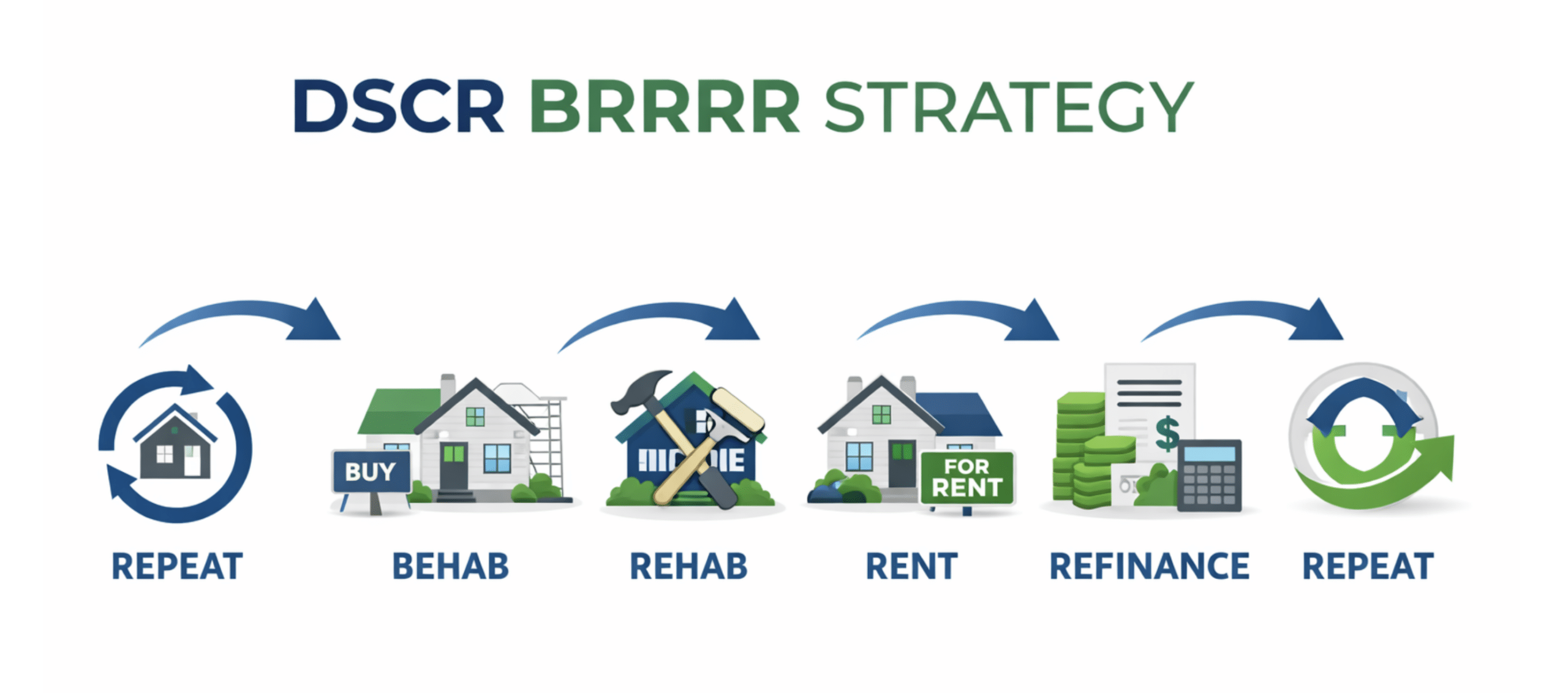
BRRRR, which stands for Buy, Rehab, Rent, Refinance, Repeat, is one of the most effective portfolio-building frameworks in real estate. The problem is that most investors are running it through the wrong financing lens. Conventional BRRRR refinances rely on tax returns, W-2s, and personal debt-to-income ratios that tighten as portfolios grow. DSCR flips that equation. The property qualifies, not the borrower. For Idaho investors working across Boise, Meridian, Nampa, Caldwell, and surrounding markets, that distinction determines whether capital comes back out or stays trapped in the deal.
What Changes When You Run a DSCR BRRRR Strategy in Idaho
A DSCR loan qualifies based on the property’s rental income, not your personal financials. The formula is straightforward. DSCR equals monthly rent divided by monthly PITI, which includes principal, interest, taxes, and insurance. A ratio of 1.0 means the income covers the payment, and stronger ratios create more flexibility in how the deal can be structured.
When you apply that to a BRRRR deal, the refinance conversation shifts. The question is no longer what your tax returns show. It becomes what the property produces and how that income will be evaluated by the lender. For self-employed investors and portfolio builders, that shift changes what is possible on the refinance step.
The second change is scale. Conventional lending eventually runs into limits. DSCR does not operate with the same ceiling, but it still requires the deal to be structured correctly from the beginning. If the goal is to repeat the process, the financing path has to support that before the first property is ever acquired.
Why This Matters for Idaho Investors Right Now
Across the Treasure Valley, property values have moved faster than rents. Boise, Meridian, Nampa, and Caldwell all experienced strong appreciation, but rent growth did not always keep pace. That tightened margins and made the refinance step harder to execute cleanly.
As a result, investors have adjusted. Some are adding bedrooms, changing layouts, or exploring co-living and mid-term rental strategies to improve income. The income can still work, but it introduces another variable that most investors underestimate when planning the refinance.
Nampa and Caldwell still offer a spread between purchase price and achievable rent that allows BRRRR deals to work with the right structure. Meridian sits in the middle, where deals require more precision. Boise is tighter, where small gaps in rent assumptions or valuation show up quickly. The same strategy produces different outcomes depending on where the property is located.
Where DSCR BRRRR Deals Get Stuck in Idaho
The refinance usually does not fail because of income. It stalls because of valuation.
The appraiser is not starting with how the property is rented. They are starting with comparable sales. A three-bedroom property is compared to other three-bedroom properties, regardless of how it is being used or what the income looks like after improvements.
That creates a disconnect. The property can support the payment, but the value still limits the refinance. When those two do not align, capital stays in the deal longer than expected.
At that point, the timeline begins to stretch. And when it stretches, the holding costs do not stop. Interest, taxes, insurance, and utilities continue whether the refinance works or not. That is where many deals begin to tighten, not because the property failed, but because the timeline was underestimated on the front end.
The Seasoning Myth in DSCR BRRRR Strategy in Idaho
This is where many investors extend their timelines without realizing it.
It is common to hear that a refinance requires six to twelve months, that new value cannot be used, or that the loan is tied to the original purchase price. Those assumptions come from conventional lending guidelines, but they are not universal in DSCR lending.
Some DSCR programs allow refinancing based on updated value, with reduced or no seasoning depending on how the deal is structured and how the property performs. That does not mean every deal qualifies immediately, but it does mean the timeline is more flexible than most investors assume.
Understanding that difference ahead of time changes how the deal is structured from the beginning.
For a closer look at how no-seasoning cash-out refinances actually work on Idaho rental properties, you can read more here:
https://www.dscrfinancing.com/dscr-no-seasoning-cash-out-refinance-idaho/
The Math Behind a DSCR BRRRR Strategy in Idaho
This is how the structure shows up in actual Idaho deals.
Deal A in Nampa starts with a $295,000 purchase and a $42,000 rehab, for a total investment of $337,000. After improvements, the property appraises at $390,000. A refinance at 75 percent loan-to-value produces $292,500, leaving approximately $44,500 in the deal. With monthly PITI around $2,190 and rent at $1,950, the deal sits right at the margin and does not leave much room for error on the refinance.
Deal B in Caldwell starts with a $265,000 purchase and a $38,000 rehab, for a total of $303,000. The after-repair value comes in at $355,000. A 75 percent refinance produces $266,250, leaving about $36,750 in the deal. With PITI around $1,990 and rent at $1,800, the deal is close to qualifying and becomes more stable as rent increases or structure improves.
In both cases, the outcome depends less on the idea of the deal and more on how it is structured from the beginning.
How to Structure a DSCR BRRRR Strategy in Idaho Correctly
The investors who move through these deals consistently are not guessing on the refinance. They make those decisions before they buy the property.
They evaluate what the property is likely to appraise for after improvements, what rent will actually be recognized by the lender, which lenders will accept the structure, and what DSCR ratio the deal will produce.
Most investors do not think about this until they are already in the deal.
That is where the outcome is determined. Not after the rehab, but before the purchase.
Common Mistakes That Stall DSCR BRRRR Deals
Many investors assume seasoning timelines are fixed. That assumption usually comes from conventional lending, where waiting periods are standard. In DSCR lending, those timelines can change depending on the lender and the structure, but most investors never revisit the assumption once they hear it.
Others underwrite rent too aggressively without confirming how the lender will actually calculate income. It is common to run projections using market rent, only to find out later that the lender is using a lease or a more conservative number. That difference can shift the DSCR enough to change the loan outcome.
Some rely on income without fully accounting for valuation. The property can perform, but if comparable sales do not support the new structure, the refinance is still limited. That disconnect is where many deals stall even when the strategy itself was solid.
Finally, some investors target the wrong submarkets for this approach. In tighter areas like parts of Boise and Meridian, the spread between purchase price and after-repair value is smaller. In places like Nampa and Caldwell, there is often more room, but only if the deal is structured correctly from the start.
FAQ: DSCR BRRRR Strategy in Idaho
Do you need to wait 6 to 12 months before refinancing a BRRRR deal in Idaho?
Not always. Some DSCR lenders allow refinancing based on updated value with reduced or no seasoning, depending on how the loan is structured and how the property performs.
What DSCR ratio do you need for a BRRRR refinance in Idaho?
Most lenders target a DSCR of 1.0 or higher, where the property income covers the payment. Some programs will go below that or even offer no-ratio options, but those typically come with tradeoffs in rate, leverage, or structure. The stronger the ratio, the more flexibility you have on the refinance.
Can you use market rent instead of lease rent?
Some lenders use market rent from the appraisal, some require executed leases, and others allow whichever is higher. This directly impacts your DSCR and the loan options available.
Does appraisal or income matter more in a DSCR BRRRR deal?
Both matter, but in different ways. Income determines whether the loan qualifies. The appraisal determines how much capital can be pulled out of the property.
Final Thought
Most investors approach BRRRR as a deal problem. They focus on finding the right property and executing the rehab, assuming the refinance will follow.
But the investors who keep recycling capital are not relying on that sequence. They are deciding how the refinance works before they ever close. They understand what the appraisal needs to support, how the income will be evaluated, and which lenders fit the structure.
That is the difference.
Not better deals. Better decisions earlier in the process.
If you want to understand how those structures are actually being built in Idaho, you can start here:
https://www.dscrfinancing.com/dscr-loans-idaho/