
Rural DSCR Loans in Idaho: How Investors Are Building Portfolios Outside the Treasure Valley
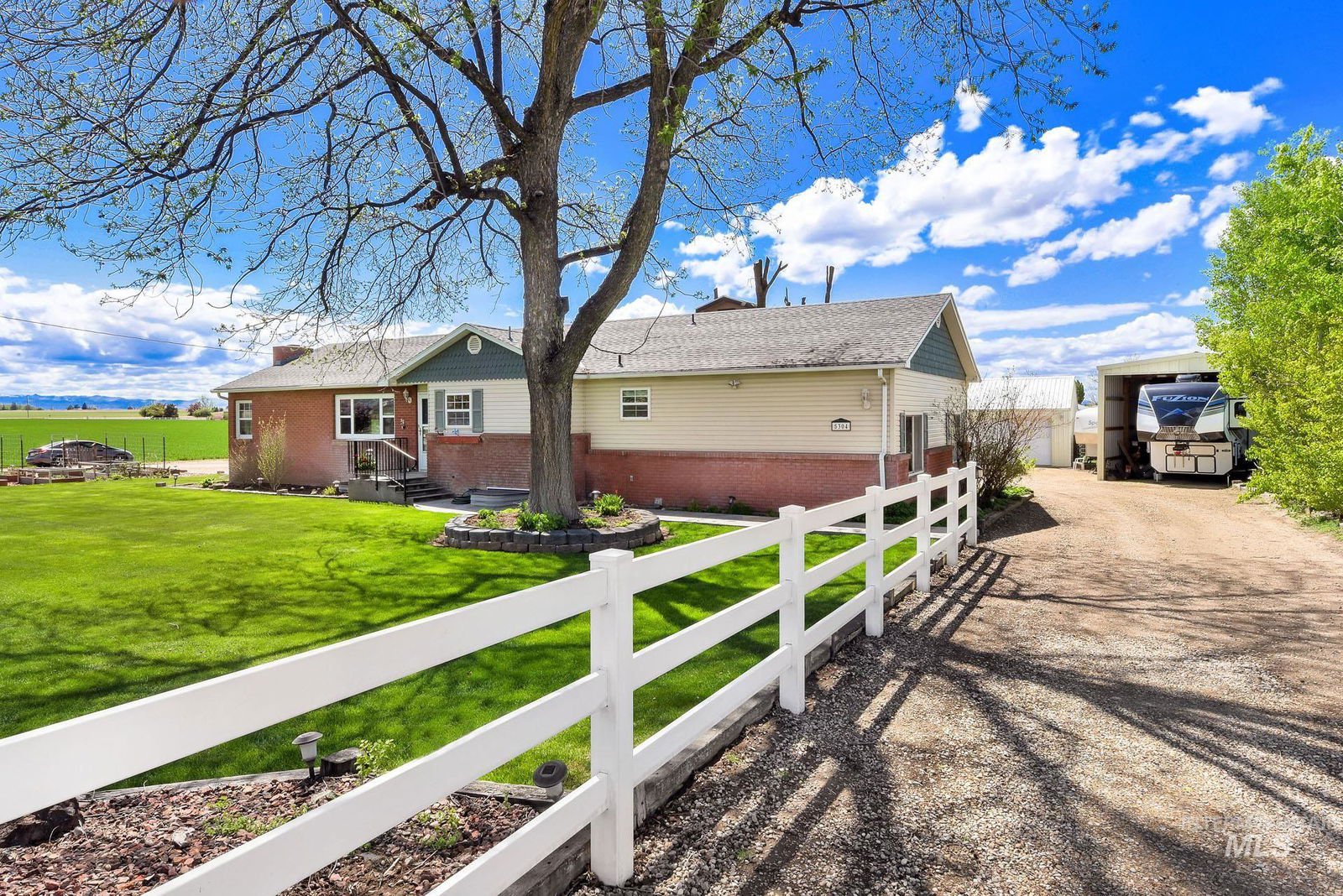
Idaho's most productive DSCR markets are not where most investors are looking.
While attention concentrates on Boise and Meridian, rural Idaho is quietly delivering some of the strongest price-to-rent relationships in the Mountain West. Twin Falls, Pocatello, Idaho Falls, Lewiston, Sandpoint, and Caldwell are producing cash flow numbers that the Treasure Valley stopped producing years ago — and select rural DSCR programs can give investors access to those markets with less capital down per door than most investors realize may be possible.
This is not a fallback strategy for investors who cannot afford Boise. It is a deliberate capital efficiency play that sophisticated Idaho DSCR investors are running right now.
Why Rural Idaho DSCR Math Works Differently Than the Treasure Valley
Idaho's population growth story is well documented. The state has been among the fastest growing in the country for over a decade. But that growth has not been uniform — and the financing implications are not uniform either.
In the Treasure Valley, values have risen faster than rents for several consecutive years. A property in Boise that might have produced a 1.25 DSCR ratio several years ago may now produce 0.95 or lower at current acquisition prices. Investors are not doing anything wrong. The market has simply moved faster than rental income has followed.
Rural Idaho has followed a different trajectory. Population growth is reaching secondary and tertiary markets — Twin Falls, Pocatello, Idaho Falls, Lewiston, Sandpoint, and Caldwell are all absorbing in-migration from higher cost areas. But acquisition prices in these markets have not escalated at the same pace as the Treasure Valley. The result is a price-to-rent relationship that has historically supported more favorable DSCR ratios than investors often encounter in the Treasure Valley — though conditions vary by market and property.
This divergence reflects different economic drivers, different housing supply dynamics, and different demand bases in each region — though market conditions in any individual area can shift.
What Higher-Leverage Rural DSCR Programs Can Mean for Your Portfolio
Leverage and credit requirements on rural DSCR purchases vary by lender, program, property type, rural classification, DSCR ratio, and borrower profile. Some programs have offered purchase leverage up to 80% LTV on single family and 2-4 unit multifamily properties — that is an example of what may be available through qualifying programs, not a universal rule across all lenders or rural properties. Credit thresholds, reserve requirements, and maximum leverage will depend on the specific program and transaction.
To illustrate what higher-leverage rural programs can mean in capital deployment terms: a $280,000 single family property at 80% LTV requires $56,000 down — versus $70,000 at a standard 25% down purchase. A $320,000 four-plex at 80% LTV requires $64,000 down versus $80,000 at 25%. That difference per transaction, compounding across a multi-property acquisition strategy, is significant for investors who qualify for those programs.
Rural Idaho DSCR loans at qualifying leverage levels are a portfolio construction strategy — not just a financing option — for investors whose profiles and properties fit the right program.
Cash-Out and Refinance Structures for Rural Idaho Properties
Cash-out leverage, credit requirements, and seasoning rules for rural DSCR refinances vary by lender and program — and vary further depending on whether the property is a long-term rental or a short-term rental.
Ownership seasoning, value seasoning, and cash-out seasoning requirements are not uniform. Some programs may permit shorter or no-seasoning structures for stabilized long-term rental properties; others impose specific seasoning or eligible-value restrictions. Understanding how seasoning rules apply to your specific transaction — before you close on an acquisition — is essential for anyone planning to recycle capital through a rural Idaho DSCR cash-out.
Short-term rental and Airbnb properties in rural Idaho carry their own lender-specific guidelines. Ownership seasoning, occupancy or operational history requirements, value seasoning, and cash-out seasoning all vary by program. Some programs require a period of stabilized operation before cash-out is available; others structure eligibility differently. Do not assume that the same rules governing a long-term rental refinance apply to a rural STR — confirm the specific requirements before going under contract on a rural Airbnb acquisition.
Rate and term refinance structures for rural Idaho properties are also available through a range of programs. Maximum leverage and eligibility depend on the specific lender, program, property type, and rural designation.
Rural Idaho DSCR Loans When the Ratio Falls Below 1.0
Demographics are pushing values higher in rural Idaho markets. In some areas rents have not kept pace with that appreciation. Investors are arriving at DSCR ratios of 0.90, 0.92, or 0.95 on properties that make fundamental sense as long-term holds but technically fall below the 1.0 threshold most investors assume is a hard floor.
It is not a hard floor.
Idaho DSCR loan approvals can occur at ratios below 1.0 when the right combination of borrower profile, property characteristics, and capital contribution align with lender risk models. A larger down payment, a stronger credit profile, or a property with demonstrable rent growth upside can support approval at sub-1.0 ratios through the right program.
No-ratio DSCR structures are also available for specific scenarios — particularly for specialized income-producing rural properties where conventional rent schedule analysis does not fully capture the property's income potential. Program availability varies by lender.
The point is this: a rural Idaho deal that pencils at 0.92 DSCR is not automatically a dead deal. It is a deal that requires the right lender and the right program. That distinction is what separates investors who close rural Idaho acquisitions from those who walk away from properties that could have worked.
Rural Classification, Appraisal, and Property Eligibility
A property being outside a major Idaho metro does not automatically mean every lender classifies it the same way. Rural designation is determined at the lender and program level — not by geography alone — and it affects more than just the label on the loan.
Rural classification can affect maximum leverage, property eligibility, appraisal requirements, comparable-sale standards, acreage limits, property condition requirements, pricing, reserves, and the pool of lenders willing to fund the transaction. Two properties in the same county can receive different treatment depending on their specific characteristics and which lender is evaluating them.
Appraisal complexity tends to be higher in rural Idaho than in urban markets. Comparable sales can be sparse, require broader geographic search areas, or involve time adjustments that affect the value conclusion. Unique property characteristics — acreage, water rights, outbuildings, non-standard construction, agricultural use — can complicate comparable selection or limit lender eligibility. Lenders have overlays on how they interpret rural appraisals, and those overlays differ.
None of this means rural properties are unfundable. It means the correct lender and program must match the specific property. A rural Idaho property that one lender declines may be a straightforward approval through a lender whose guidelines are built for that market, property type, and acreage profile. Confirming lender and program fit at the property level — before the investor commits to the deal — is the most consequential step in any rural Idaho DSCR acquisition.
Twin Falls and the Magic Valley
Twin Falls is the anchor of the Magic Valley and one of the most active DSCR investment markets in rural Idaho.
The local economy is built on agriculture, food processing, and healthcare. Chobani's major facility here is one of the largest yogurt manufacturing plants in the world — a stable, recession-resistant employment base that supports consistent rental demand. Healthcare systems serving the broader Magic Valley region add another layer of employment diversity.
Historically, Twin Falls acquisition prices have supported DSCR ratios that compare favorably to what investors encounter in the Treasure Valley at similar leverage. Investor competition in Twin Falls remains a fraction of what exists in Boise. Specific ratios depend on current acquisition price, confirmed market rent, and program parameters — run the numbers at the property level before committing.
Pocatello and Bannock County: University-Anchored Demand
Pocatello is one of the most underappreciated DSCR markets in Idaho.
Idaho State University creates a rental demand base that is largely insulated from broader economic cycles. Student housing, faculty housing, and the professional workforce that supports a major university all generate consistent rental absorption year over year.
Pocatello's acquisition prices have historically been among the lowest of any Idaho market with material rental demand — producing price-to-rent relationships that can support strong DSCR ratios for investors who qualify for higher-leverage programs. For investors focused on cash flow as the primary return driver, Pocatello remains one of the most cost-efficient entry points in Idaho. Run current market rent comps at the property level before committing — conditions shift.
Idaho Falls and Bonneville County: Energy Sector Stability
Idaho Falls sits at the intersection of two powerful demand drivers: Idaho National Laboratory and a regional healthcare system serving a large geographic area. INL employs thousands of highly educated professionals who need quality rental housing — producing a tenant profile that is stable, professional, and financially reliable.
Idaho Falls acquisition prices have historically supported favorable DSCR ratios at competitive leverage, with investor competition well below Treasure Valley levels. Specific program parameters and rural classification vary by property location. Lender selection matters here — not all DSCR lenders treat rural-adjacent Idaho Falls properties the same way, and confirming program fit before application prevents surprises at underwriting.
Lewiston and Nez Perce County: Healthcare-Anchored Demand
Lewiston's economy is anchored by St. Joseph Regional Medical Center and its position as a regional trade center for north-central Idaho and southeastern Washington. Acquisition prices in Lewiston have historically supported positive DSCR ratios for long-term rental investors, with investor competition remaining minimal compared to the Treasure Valley. The healthcare-anchored demand base provides long-term rental stability. As with all rural Idaho markets, rural classification, appraisal guidelines, and lender eligibility should be confirmed at the property level before application.
Sandpoint and Bonner County: Long-Term Rental and STR Upside
Sandpoint is simultaneously a long-term rental market driven by healthcare and remote worker in-migration and one of Idaho's most active short-term rental markets driven by Schweitzer Mountain Resort and Lake Pend Oreille.
As a rural market, Sandpoint properties can qualify for higher-leverage DSCR purchase programs — for both long-term rental and short-term rental property types — depending on lender and program eligibility. STR income qualifying methodology varies substantially by lender and transaction. Depending on the program, income may be supported by eligible STR projections, appraisal-based market rent, documented operating history, or another permitted approach. How lenders underwrite short-term rental income is worth confirming before you select a program for a rural Airbnb acquisition. Cash-out refinance eligibility for rural STR properties is lender-specific — seasoning requirements, leverage limits, and credit thresholds vary by program.
Caldwell and Canyon County: The Treasure Valley's Rural DSCR Bridge Market
Caldwell sits within the Treasure Valley and benefits from the same employment and population growth dynamics as Boise and Meridian — but its acquisition prices and DSCR ratios have historically behaved more like a rural market than an urban one. For investors who want Treasure Valley proximity with more favorable price-to-rent math, Caldwell has been one of the more accessible entry points in the greater Boise area. Rural classification for Caldwell properties varies by lender — confirm eligibility at the property level before application.
How Rural Idaho DSCR Loans Work
Most standard DSCR programs qualify primarily from the property's rental income and property-level cash flow rather than a conventional personal debt-to-income calculation. Under most standard DSCR programs, qualifying is based on the property’s rental income rather than personal tax returns or W-2s — the DSCR ratio is the primary underwriting metric. That said, credit, assets, reserve requirements, and other borrower-level criteria still apply and vary by lender and program.
Before you are under contract, we run preliminary DSCR math using market rent comps specific to your target rural Idaho market. You get the ratio estimate and the program recommendation before you commit to the property.
Once you have a target property, we confirm the DSCR program that fits the market, property type, rural designation, and your borrower profile. Pre-approval under most programs is structured around property cash flow rather than personal income documentation. Understanding how DSCR loans are underwritten before your first rural Idaho acquisition saves time — rural program nuances add complexity that investors coming from conventional financing do not always anticipate.
Once you are under contract, we order the appraisal with the 1007 rent schedule. This establishes the official rent figure for underwriting and confirms the qualifying ratio. Whether lenders use market rent or lease rent to qualify the loan depends on the program — particularly relevant for rural properties where rent comps can be limited and mismatched income documentation is a common denial reason.
Underwriting focuses on the appraisal, DSCR ratio, credit profile, and reserves. Rural Idaho DSCR loans can close in your LLC. Timeline is typically 21 to 30 days from application to closing, depending on appraisal turnaround and rural property complexity.
What to Confirm Before You Go Under Contract
Rural Idaho DSCR investing requires more pre-contract confirmation than a standard Treasure Valley acquisition — not because rural properties are harder to finance, but because the rural lender landscape is more fragmented. A property that one lender declines may close without issue through a lender whose guidelines are built for that market and property type.
Before committing to a rural Idaho property, confirm: rural classification at the property level with a specific lender, maximum leverage and credit thresholds for that program, how STR or LTR income will be qualified, appraisal expectations given property characteristics and local comp availability, and reserve requirements for your borrower profile and transaction.
If you want to know exactly what the DSCR number looks like on a specific property before you go under contract, start with a property-level analysis. Bring the address and the purchase price. We run the numbers before you commit.
Program details and market conditions referenced in this article are illustrative and subject to change. Actual DSCR ratios, leverage availability, credit requirements, and program eligibility depend on specific property financials, lender guidelines, rural designation, and borrower profile at time of application. All loan scenarios should be evaluated individually.
Frequently Asked Questions
- Can you get a DSCR loan on a rural property in Idaho?
- Yes. Rural Idaho properties can qualify for DSCR financing for purchase, rate and term refinance, and cash-out refinance. Specific leverage limits, credit requirements, property eligibility, and available lenders vary by rural classification and program. Some lenders specialize in rural DSCR structures while others have limited rural eligibility. Confirming lender and program fit at the property level before going under contract is the most important step in any rural Idaho DSCR transaction.
- Do rural DSCR loans require a larger down payment?
- Not necessarily. Leverage requirements on rural DSCR purchases vary by lender, program, property type, rural classification, and borrower profile. Some programs have offered purchase leverage up to 80% LTV — equivalent to a 20% down payment — for qualifying rural single family and 2-4 unit multifamily properties. Others cap rural leverage lower. The specific down payment required depends on the lender, program, DSCR ratio, and transaction structure. Confirming leverage availability for a specific rural Idaho property before application prevents surprises at underwriting.
- Do DSCR lenders have different rules for rural properties?
- Yes, often substantially different. Rural classification can affect maximum leverage, appraisal requirements, comparable-sale standards, acreage limits, property condition requirements, pricing, reserves, and the pool of lenders available for the transaction. Two properties in the same county can receive different treatment depending on their specific characteristics and the lender reviewing them. A property that one lender declines may be a straightforward approval through a lender with rural-specific programs. Rural designation is confirmed at the property and lender level — not solely by geography.
- Can Airbnb or short-term rental income be used on a rural Idaho DSCR loan?
- Yes, though qualifying income methodology varies by lender and program. Depending on the program, STR income may be supported by eligible STR projections, appraisal-based market rent, documented operating history, or another lender-permitted approach. Purchase and refinance treatment may also differ. Cash-out refinance eligibility for rural STR properties carries its own lender-specific rules around seasoning, leverage, and credit thresholds. Confirm how income will be underwritten before selecting a program — the methodology directly affects your qualifying DSCR ratio.
- Can you cash out refinance a rural Idaho property without waiting six months?
- It depends on the lender and program. Ownership seasoning, value seasoning, and cash-out seasoning requirements for rural DSCR refinances are not uniform. Some programs may permit shorter or no-seasoning structures for stabilized long-term rental properties; others impose specific seasoning or eligible-value restrictions. Short-term rental properties typically carry additional lender-specific requirements. Confirming which seasoning rules apply to your specific property and transaction structure is essential before assuming a cash-out refinance will be available on a particular timeline.
- Does acreage affect DSCR loan eligibility?
- It can. Excess acreage — land beyond what is typical for the neighborhood — is a common rural DSCR underwriting issue. Lenders have different thresholds for acceptable acreage, how acreage is valued in the appraisal, and whether the property remains eligible as a standard investment property. Unique rural characteristics such as agricultural land, outbuildings, water rights, and non-standard construction can also affect appraisal complexity and lender eligibility. A property with material acreage should be evaluated for lender-level eligibility before going under contract.
- Can a vacant rural property qualify for a DSCR loan?
- Possibly, depending on the lender, program, and property condition. Some DSCR programs accept vacant properties for purchase or refinance and use a market rent appraisal (1007 rent schedule) to establish qualifying income rather than actual lease income. Others require a tenant in place or documented rental history. Property condition, marketability, and rural classification also affect eligibility. A vacant rural Idaho property is worth evaluating at the lender level to identify which programs apply and what the qualification path looks like.
- Why might one DSCR lender approve a rural Idaho property that another lender declines?
- Rural DSCR lenders have different program overlays, rural classification standards, appraisal guidelines, and property eligibility requirements. One lender's rural overlay may exclude a property type or acreage level that another lender funds routinely. Appraisal interpretation, comparable-sale standards, and distance-from-metro requirements vary. DSCR thresholds, leverage caps, and credit requirements for rural properties also differ across lenders. The practical result is that a rural Idaho property that fails one lender's guidelines can be a clean approval through a lender whose programs are built for that market and property type.

About the Author
Patrick Penner
NMLS #459913 • Coast2Coast Mortgage • Licensed in 46 States
Patrick Penner is a mortgage strategist specializing in DSCR and investment property financing, helping investors structure lending around rental income, portfolio growth, liquidity, and long-term strategy. Based in Idaho and working with investors nationwide, he focuses on helping clients navigate financing beyond traditional lending approaches.
His work includes DSCR purchases, refinances, cash-out strategies, BRRRR properties, Airbnb and short-term rentals, co-living, PadSplit, care homes, mixed-use properties, and other specialty investment scenarios.