
DSCR No Seasoning Cash-Out Refinance Idaho: How a Vacant Four Plex Produced a 1.53 DSCR and Returned Every Dollar on Day One!
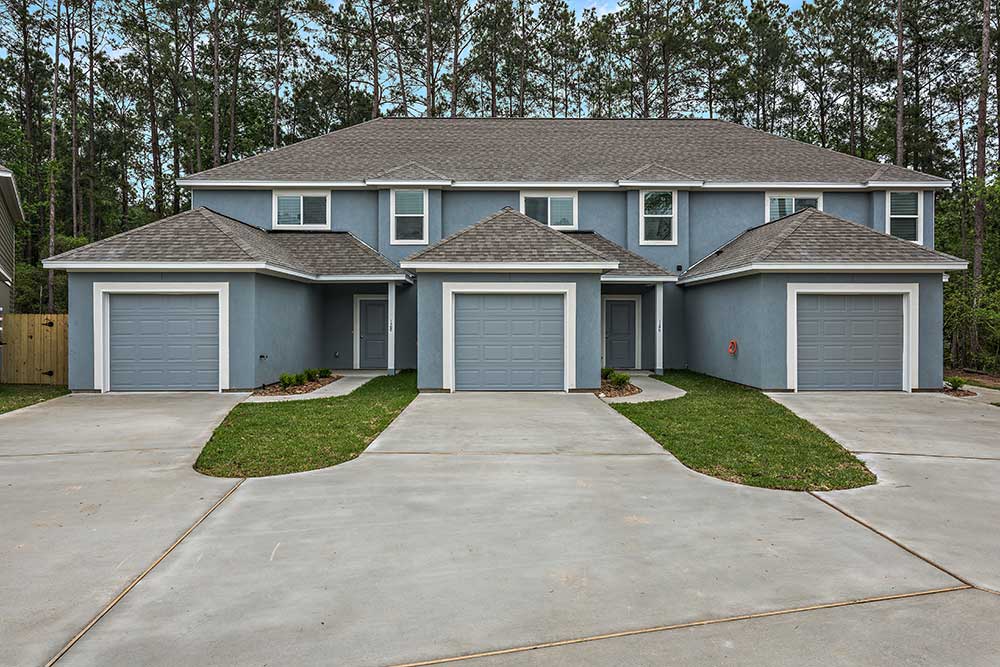
A Vacant Property. Zero Rental History. A 1.53 DSCR Ratio the Day Rehab Was Complete.
Most investors assume a vacant property cannot qualify for a DSCR cash-out refinance. No tenants. No rental income history. No executed leases. In conventional financing that assumption is correct — and it is the reason most BRRRR investors sit on completed deals waiting for a seasoning clock to expire before they can access the equity they already created.
Under select DSCR programs, that assumption does not hold.
A local Idaho Falls investor recently closed a no-seasoning DSCR cash-out refinance on a vacant four-plex the day his rehab was complete. The property had no tenants, no rental income history, no executed leases. The qualifying DSCR ratio of 1.53 was supported entirely by market rent from the appraisal's 1007 rent schedule — and $40,000 in equity was wired to the investor on closing day. Here is how that deal worked, what program requirements made it possible, and what investors need to confirm before assuming the same outcome is available on their property.
Why 1.53 DSCR on a Vacant Property Matters
The number that defines this deal is not the purchase price or the after-repair value. It is the 1.53 DSCR ratio produced by a vacant property with zero rental income history.
Combined market rent above $4,000 per month across all four units divided by $2,600 monthly PITI on the new $315,000 loan produces a ratio of 1.53. Many standard DSCR programs are structured around a ratio near or above 1.0. Pricing and leverage can improve at stronger DSCR levels in some programs — but exact thresholds and their effect on terms vary by lender. In this case the 1.53 ratio placed the refinance well above minimum thresholds for the specific program used.
That ratio was established entirely by the appraisal's 1007 rent schedule — a comparable market rent analysis that determined what each unit would lease for in the Idaho Falls market based on comparable rental properties in the area. No tenants required. No rental income history required. No executed leases required. The program used in this transaction accepted vacant properties and qualified on market rent from the appraisal alone.
The Idaho Falls Case Study: Full Numbers
The deal started with a distressed four-plex in Idaho Falls acquired at $250,000 — below the stabilized market value for comparable properties in the area at the time.
Acquisition and renovation capital:
Purchase price: $250,000
Renovation cost: $25,000
Investor out-of-pocket at acquisition (10% down plus closing costs): approximately $30,000 to $35,000
After-repair performance:
After-repair appraised value: $420,000
Forced equity created: $145,000
Combined market rent across all four units: $4,000+ per month
Monthly PITI on new DSCR loan: $2,600
DSCR ratio at refinance: 1.53
DSCR no-seasoning cash-out refinance results:
New loan at 75% LTV on $420,000: $315,000
Private money payoff: $275,000
Cash-out to investor: $40,000
The investor put approximately $30,000 to $35,000 of their own capital into this deal. The no-seasoning DSCR cash-out refinance returned $40,000 on closing day — recovering every dollar invested plus profit. The four-plex remains on title generating $1,400 or more per month above debt service, with $105,000 in remaining equity and a 1.53 DSCR ratio.
These figures are specific to this transaction. Program parameters, eligible value, qualifying rent methodology, and available leverage vary by lender and transaction — the $315,000 loan amount and $40,000 return reflect this deal's specific financials and program structure, not a formula applicable to every Idaho property.
The Acquisition Financing Structure in This Case Study
Understanding how the acquisition was financed is necessary to understand the capital efficiency outcome.
In this transaction, the acquisition financing covered approximately 90% of the purchase price with 100% of renovation costs drawn separately — leaving the investor's out-of-pocket at approximately $30,000 to $35,000 total (the 10% down payment plus closing costs). The $25,000 renovation was drawn entirely from the acquisition financing facility. No additional investor capital was deployed during the renovation phase.
This is the structure used in this specific deal. Private money and bridge lending terms — including loan-to-cost ratios, rehab coverage, points, and carry costs — vary by lender, market, borrower, and transaction. Do not assume these terms are universally available without confirming program fit for a specific acquisition.
The five-step sequence this investor used: acquire with bridge financing → execute renovation → stabilize and order appraisal → close the DSCR no-seasoning cash-out refinance → redeploy the returned capital. The BRRRR sequence applied through a qualifying no-seasoning DSCR program is the mechanism that drove the capital efficiency outcome. The specific program conditions — how the lender treated seasoning, occupancy, and qualifying rent — are what made that sequence executable without a waiting period.
How the No-Seasoning Program Worked — and What It Did Not Guarantee
Conventional cash-out refinance guidelines include seasoning requirements that depend on the transaction and are subject to exceptions. Under current Fannie Mae and Freddie Mac guidelines, an existing first mortgage being paid off through a cash-out refinance generally must be at least 12 months old, while title-ownership requirements generally include a six-month period. Exceptions and alternative treatment can apply, including certain delayed-financing scenarios. For BRRRR investors, that means a newly completed renovation may not immediately allow access to the property’s new appraised value through a conventional cash-out refinance. Investors planning to refinance shortly after acquisition should confirm the current agency and lender requirements before structuring the purchase and renovation.
Some DSCR programs may permit cash-out refinancing using updated appraised value with reduced or no seasoning after applicable program requirements are met, while others impose ownership, value, occupancy, stabilization, or cash-out seasoning requirements. The program used in this Idaho Falls transaction did not require a seasoning period from the purchase date. The timeline from renovation completion to cash-out proceeds was determined by the appraisal and underwriting process — not a waiting period. Appraisal order to closing ran approximately 21 to 30 days.
What "no seasoning" meant in this program: no required ownership waiting period before the refinance could be considered. What it did not mean: that every cash-out requirement was waived, that any vacant property automatically qualified, or that full updated appraised value is available under every program. How the lender classifies the refinance — the eligible value basis, occupancy requirements, and cash-out structure — determined the outcome as much as the appraised value itself.
The speed advantage of no-seasoning programs can compound significantly across multiple transactions. An investor who can recycle bridge capital through a DSCR no-seasoning structure and avoid the refinance delays that derail conventional BRRRR exits can execute more acquisitions with the same capital base. But that advantage is only available when the specific program, lender, property, and borrower profile align correctly.
LTV, Credit, and Program Parameters
Understanding the LTV parameters before acquisition is essential for accurate cash-out modeling on any BRRRR transaction.
The program used in this transaction offered cash-out at 75% LTV of the appraised value with no ownership seasoning requirement for 1–4 unit properties. Select programs may offer cash-out structures around 75% LTV for qualifying borrowers and properties. Some programs may require a qualifying credit profile around a 660 score — that figure reflects a specific program structure, not a universal DSCR cash-out minimum. Credit requirements, maximum leverage, and eligible value all vary by lender and program.
The 1.53 ratio in this case placed the refinance well above minimum qualification thresholds for the specific program. Many standard DSCR programs are structured around a ratio near or above 1.0, while low-ratio and no-ratio options also exist. Required ratio, its effect on available leverage, and its effect on pricing vary by lender.
Most standard DSCR programs qualify primarily from the property's rental income and property-level cash flow rather than a conventional personal debt-to-income calculation. Credit, assets, reserve requirements, guarantor requirements, and other borrower-level criteria can still apply and vary by lender and program.
Appraisal, Rent, and Value — What the Numbers Actually Represent
The $420,000 appraised value in this case study was established using comparable sales in the Idaho Falls market. The 1007 rent schedule established qualifying rent — $4,000+ combined across four units — using comparable rental properties in the area.
Two important distinctions apply to any no-seasoning cash-out refinance:
Higher rental income does not automatically create equal appraised value. The appraisal establishes market value using relevant comparable sales and property characteristics. Stronger rental income may support DSCR qualification without producing an equivalent increase in market value — which directly affects the cash-out amount available at any LTV.
Buying below market and improving the property does not automatically mean the refinance can use full updated appraised value. Eligible value may depend on the lender and program, acquisition history, ownership period, stabilization requirements, occupancy requirements, refinance classification, and other overlays. Qualifying rent methodology varies by lender and program — depending on the property and transaction, eligible income may come from a lease, appraisal-supported market rent, STR methodology, or another permitted source.
Idaho Falls and the Conditions This Deal Required
The BRRRR DSCR no-seasoning cash-out sequence works in markets where three conditions exist simultaneously: below-market acquisition pricing, renovation upside that creates meaningful forced equity, and rental demand that supports a strong DSCR ratio on the new appraised value.
Idaho Falls presented these conditions for this transaction. Below-market acquisition pricing was available because investor competition in Idaho Falls had not reached the level that compressed opportunity in the Treasure Valley. The $25,000 renovation contributed to $145,000 in value creation between acquisition price and appraised value. Rental demand is anchored by Idaho National Laboratory and a regional healthcare system — employment bases that support professional tenant demand across the area.
Other rural Idaho markets may offer similar combinations of below-market pricing, renovation upside, and rental demand. Whether a specific property in any market supports the BRRRR DSCR no-seasoning sequence depends on current acquisition pricing, current market rent, and which programs are available for that property type, location, and loan structure. The figures in this case study reflect this transaction's specific conditions and program — not a formula that applies to every Idaho Falls property or every rural Idaho market.
The Capital Efficiency Picture: What This Deal Produced
Complete capital efficiency summary from acquisition through DSCR no-seasoning cash-out refinance:
Investor capital deployed: approximately $30,000 to $35,000
Capital returned on closing day: $40,000
Net capital position after refinance: positive — more returned than deployed
Monthly cash flow above debt service: $1,400+
Equity remaining in property: $105,000
DSCR ratio: 1.53
Performing asset retained: four-unit property in Idaho Falls generating income above debt service
This outcome was produced by the alignment of a specific acquisition price, a specific appraised value, a specific qualifying rent, and a specific program structure. Each element had to work. The deal that looks right on paper can produce a materially different refinance outcome under a different program or with a different appraisal result.
STR and Airbnb Properties: Different Rules Apply
This case study involved a four-plex acquired for long-term rental use. Short-term rental and Airbnb properties carry different lender guidelines. STR seasoning requirements, value basis, income methodology, occupancy and stabilization requirements, and cash-out treatment vary by lender and program — do not assume the no-seasoning LTR structure described here applies to a short-term rental acquisition without confirming the specific program rules. How lenders underwrite short-term rental income for cash-out purposes differs materially from long-term rental treatment.
Why Lender Selection Determined the Outcome
The single most important variable in this transaction was not the appraised value or the DSCR ratio. It was identifying the program that treated seasoning, eligible value, occupancy, and qualifying rent in a way that matched this property and this borrower's profile.
The question for any investor evaluating a no-seasoning DSCR cash-out refinance is not simply: "Does this lender offer DSCR?" The investor should confirm: how the lender defines the ownership seasoning period, what value basis the program permits (appraised value, acquisition basis, or lesser of), how occupancy and stabilization requirements apply at time of application, how the 1007 rent schedule is used versus an executed lease, what LTV and credit thresholds apply for cash-out, what reserve requirements apply, and how the lender classifies the refinance type for this property.
DSCR lender selection for cash-out refinances is not interchangeable. The same four-plex reviewed by two different lenders under two different programs may produce materially different outcomes on eligible value, available leverage, qualifying rent, and cash-out amount. Confirming program fit before going under contract on an acquisition you plan to refinance is the most consequential step in any BRRRR execution.
What to Confirm Before Going Under Contract
Before committing to a BRRRR acquisition in Idaho that depends on a no-seasoning or reduced-seasoning DSCR cash-out refinance, confirm: the specific program's seasoning definition and requirements, the eligible value basis and under what conditions updated appraised value is accessible, occupancy and stabilization requirements at time of application, how market rent from the 1007 rent schedule will be used to qualify versus a lease, maximum LTV and credit requirements for cash-out, and reserve requirements for your borrower profile and property type.
If you want to know what the refinance looks like on a specific property before you go under contract, start with a property-level analysis. Bring the address, estimated purchase price, estimated after-repair value, and target market rent. We model the refinance before you commit to the deal.
Program details, market conditions, and deal structures referenced in this article reflect specific transaction facts and illustrative program examples. Actual DSCR ratios, leverage availability, credit requirements, eligible value, and program eligibility depend on specific property financials, lender guidelines, and borrower profile at time of application. All loan scenarios should be evaluated individually.
Being eligible to refinance using a new value doesn’t necessarily mean leaving the existing loan is free. The current loan’s prepayment penalty can still affect the economics of accessing that equity.
Frequently Asked Questions
- What does no-seasoning cash-out refinance mean on a DSCR loan?
- 'No seasoning' generally refers to a program that does not require a standard ownership waiting period before the refinance can be considered. It does not automatically mean the lender will use full updated appraised value or that every cash-out requirement is waived. Some programs may permit cash-out refinancing using updated appraised value with reduced or no seasoning after applicable program requirements are met, while others impose ownership, value, occupancy, stabilization, or cash-out seasoning requirements. The specific program, lender, property type, and borrower profile all affect whether a no-seasoning structure is available and on what terms.
- Can a DSCR refinance use the new appraised value right after rehab?
- Potentially. Some programs permit updated appraised value after applicable requirements are met — including occupancy, stabilization, appraisal, and program-specific overlays. Others restrict the eligible value basis to acquisition cost, a lesser-of formula, or require a waiting period before full updated value is accessible. How the lender classifies the refinance — the value basis, occupancy requirements, and cash-out structure — determines whether updated appraised value can be used and how much leverage is available against it.
- Is 75% LTV available on no-seasoning DSCR cash-out refinances?
- Select programs may offer cash-out leverage around 75% LTV for qualifying scenarios, but maximum leverage varies by lender, credit profile, DSCR ratio, property type, transaction structure, and other program overlays. The 75% figure used in the Idaho Falls case study in this article reflects the specific program applied to that transaction — not a universal ceiling or floor available across all DSCR lenders. Confirming the maximum LTV available for a specific property, borrower profile, and program before going under contract prevents modeling errors on the acquisition side.
- What credit score is needed for a no-seasoning DSCR refinance?
- Credit requirements vary by lender and program. Some programs may allow qualifying cash-out structures around a 660 credit score — that figure reflects a specific program structure, not a universal DSCR cash-out minimum. Other programs require higher scores, and credit profile can also affect the available leverage and pricing within a program. Confirming the credit requirements for the specific program and transaction is necessary before assuming a particular score qualifies.
- Does the property need to be occupied before a cash-out refinance?
- It depends on the lender and program. Some programs require an executed lease, documented occupancy, a stabilization period, or demonstrated rental income before cash-out is available. Others may accept a vacant property and use the appraisal's 1007 market rent schedule as the qualifying income source — as was the case in the Idaho Falls transaction described in this article. No universal occupancy percentage or stabilization period applies across all DSCR programs. Confirm the specific occupancy requirements for the program before assuming a vacant-property refinance is available.
- Do Airbnb or STR properties have different seasoning rules?
- Yes, often materially different. STR seasoning requirements, value basis, income methodology, occupancy and stabilization requirements, and cash-out treatment vary by lender and program. The no-seasoning structure described in this article involved a long-term rental four-plex — do not assume those terms apply to a short-term rental or Airbnb property without confirming the specific program's STR guidelines. Some programs impose additional seasoning, operational history, or income methodology requirements for STR cash-out refinances.
- What DSCR ratio is required for a cash-out refinance?
- Many standard DSCR programs are structured around a ratio near or above 1.0, while low-ratio and no-ratio options also exist. Required DSCR ratio, its effect on leverage, and its effect on pricing vary by lender and program. The 1.53 ratio in the Idaho Falls case study placed the refinance well above minimum qualification thresholds for that specific program. A lower DSCR ratio may still qualify under a different program structure, and the terms available at different ratio levels vary across lenders.
- Why can one DSCR lender allow updated value while another lender will not?
- DSCR lenders and programs apply different rules for seasoning, eligible value basis, cash-out classification, qualifying rent methodology, DSCR thresholds, leverage limits, reserve requirements, property eligibility, and appraisal overlays. One lender's program may permit updated appraised value with no ownership seasoning for a stabilized long-term rental. Another lender's program may restrict the value basis to acquisition cost or require a waiting period before updated value is accessible. The same four-plex reviewed by two different lenders can produce materially different outcomes on eligible value, available leverage, qualifying rent, and cash-out amount. Lender and program selection is the primary variable — not just the property.

About the Author
Patrick Penner
NMLS #459913 • Coast2Coast Mortgage • Licensed in 46 States
Patrick Penner is a mortgage strategist specializing in DSCR and investment property financing, helping investors structure lending around rental income, portfolio growth, liquidity, and long-term strategy. Based in Idaho and working with investors nationwide, he focuses on helping clients navigate financing beyond traditional lending approaches.
His work includes DSCR purchases, refinances, cash-out strategies, BRRRR properties, Airbnb and short-term rentals, co-living, PadSplit, care homes, mixed-use properties, and other specialty investment scenarios.